
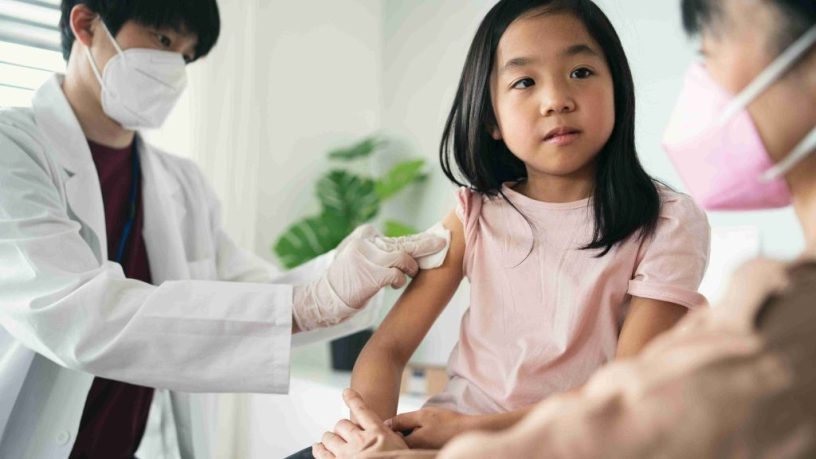
The National Childhood Immunisation Schedule (NCIS) in Singapore sets out the vaccines recommended for children from birth through their teenage years, covering diseases that cause serious illness and death in children who are not protected. NCIS vaccination follows a carefully timed sequence because the immune system’s ability to respond to vaccines and the timing of natural disease exposure both change as children grow. Understanding what the schedule contains, when each vaccine is due, and how to access it in Singapore helps parents make sure their child receives all the recommended protection.
What the NCIS Covers
The NCIS vaccination programme covers protection against:
- Tuberculosis (BCG, given at birth)
- Hepatitis B (three doses from birth to six months)
- Diphtheria, tetanus, pertussis, polio, Haemophilus influenzae type B (hexavalent vaccine, multiple doses from two months)
- Pneumococcal disease (multiple doses from two months)
- Measles, mumps, rubella (MMR, two doses at twelve and fifteen to eighteen months)
- Varicella (chickenpox, at twelve to fifteen months)
- Influenza (recommended annually from six months)
The schedule is reviewed periodically by the Ministry of Health’s Expert Committee on Immunisation, and recommendations are updated as new evidence on vaccine safety, effectiveness, and disease burden becomes available.
Why the Timing Matters
Each NCIS vaccination is given at the age at which the scientific evidence shows the vaccine works best and the child faces the greatest risk. The hepatitis B birth dose is given immediately to prevent transmission of the virus from a carrier mother to the newborn. The pneumococcal and hexavalent vaccines are given from two months when maternal immunity, which protects newborns for a short time after birth, begins to wane. MMR is given at twelve months when the immune system can mount the strong response needed for long-lasting protection.
Missing doses or giving them out of order can reduce protection. The immunisation schedule is not arbitrary, it reflects decades of clinical research across millions of children.
Subsidies and Access
NCIS vaccination is subsidised for Singapore citizens at polyclinics and CHAS-accredited GP clinics. The level of subsidy varies by vaccine and by clinic type. Polyclinics offer the highest subsidy level. CHAS-accredited GPs also offer subsidised vaccination, with the convenience of an appointment-based private clinic setting.
As former Education Minister (now President) Tharman Shanmugaratnam observed: “Singapore’s commitment to the health of its children reflects our belief that every child deserves the best possible start in life.” The childhood vaccination programme is a direct expression of that commitment.
Keeping Track of Your Child’s Vaccinations
The child’s health booklet issued at birth provides a record of all vaccinations received. Clinics record each vaccine, the dose number, and the date of administration. This booklet is requested by childcare centres, primary schools, and secondary schools as part of enrolment. Keeping it safe and up to date matters for both the child’s health and for administrative purposes when the child enters the education system.
Children who miss doses can have them completed on a catch-up schedule. The catch-up recommendations differ slightly from the standard schedule, and a GP or polyclinic doctor can advise on the appropriate approach.
NCIS Vaccination at Lion Health
Lion Health provides NCIS vaccination services for children from birth, covering all vaccines on the national schedule and additional recommended vaccines outside the core programme. Their team can advise parents on the current schedule, help track what has been given and what is due next, and provide a comfortable, family-friendly environment for appointments.
 Emedical Health Blog